LuckyWave Licence, Trust and UK Regulatory Context
 Available in GB
As of 26 September 2026, no UK Gambling Commission licence was verified for LuckyWave in the public business register. That matters specifically for players in Great Britain – England, Scotland and Wales – because the Gambling Commission says businesses providing remote gambling to consumers there need an operating licence from the Commission. It does not, by itself, prove every wider legal conclusion someone might want to draw about the brand, and it should not be stretched into a claim that LuckyWave is either “fully legal” or “illegal” across the whole United Kingdom. Northern Ireland has a separate gambling framework. The practical conclusion is narrower and more useful: do not assume that UKGC licensing, UKGC dispute structures or UKGC-specific player protections apply to LuckyWave unless a current register entry can be verified.
Table of Contents
- The UKGC register result
- Why Great Britain is the key licensing scope
- What the missing UKGC licence does and does not tell you
- UKGC rules as a benchmark, not LuckyWave protections
- Bonus rules provide a particularly clear contrast
- Online-slot stake limits are licence conditions
- Credit cards: another licensed-market benchmark
- Operator identity is a separate trust signal
- Published responsible-gambling resources
- What customer reviews can add – and what they cannot
- Tax on ordinary gambling winnings in the UK
- How to assess LuckyWave without collapsing everything into one score
- Questions that require separate evidence
- Bottom line In the UK context
- References and date
The UKGC register result
The UK Gambling Commission’s public business register is the primary place to verify whether a business holds an operating licence issued by the Commission. The register allows searches by business name, trading name, domain name or account number and showed an update date of 25 September 2026. Searches for LuckyWave and the operator name associated with the brand in its published material, AMO GLOBAL S.R.L., did not produce a verified matching UKGC operating-licence entry.
That finding is stronger than an affiliate review saying that a casino is or is not “UK licensed” because it comes from the regulator’s own licensing database. It is still important to describe the result accurately. A no-match finding means that no UKGC licence was verified for the searched brand/operator identity. It does not justify inventing a different licence number, assuming that an unrelated business entry belongs to LuckyWave, or converting the absence of a match into a sweeping legal verdict.
Why Great Britain is the key licensing scope
The Gambling Commission states that remote gambling businesses need a licence from it if they provide gambling facilities to consumers in Great Britain. In regulatory language, Great Britain means England, Scotland and Wales. This is the geographic scope that matters when comparing LuckyWave with a casino that is licensed to serve British consumers under the Gambling Act framework.
Northern Ireland should not be folded into the same sentence as though the UK had one completely uniform licensing regime. Northern Ireland has a separate gambling framework based on its own legislation. That distinction is easy to lose in generic “UK casino” copy, but it is important here because the regulatory evidence is about regulatory precision rather than marketing shorthand.
What the missing UKGC licence does and does not tell you
The verified register result provides no basis for describing LuckyWave as UKGC licensed. UKGC rules, alternative dispute resolution arrangements and UK-specific self-exclusion protections therefore cannot be assumed to govern the relationship with LuckyWave. Those protections depend on the regulatory status and obligations of the operator in question.
At the same time, licence status is an isolated fact, not a substitute for checking the rest of the product. LuckyWave’s game catalogue, payment methods, support channels, published terms and KYC rules are separate factual questions. payment methods, withdrawal rules and account verification are therefore assessed on their own evidence rather than being weakened or strengthened simply because of the UKGC result.
UKGC rules as a benchmark, not LuckyWave protections
UKGC requirements can still be useful as a comparison point because they show what a Great Britain-licensed remote operator is expected to follow. The comparison must be labelled carefully. The rules below are benchmarks for UKGC-licensed operators and should be kept separate from LuckyWave unless a corresponding licence is verified.
| Great Britain benchmark | Current UKGC position | How to use the comparison |
|---|---|---|
| Promotional wagering | Promotional wagering requirements may not exceed 10 times the incentive amount. | Compare any casino bonus terms with the licensed-market ceiling rather than assuming the ceiling applies automatically. |
| Online-slot stakes | Maximum £5 per game cycle for age 25+ and £2 for age 18-24. | Treat these as rules attached to remote casino licences, not as a statement about every offshore site. |
| Credit cards | Licensed remote operators must not accept credit-card gambling payments, including circumvention through e-wallets. | Do not infer compliance from a payment-method logo alone; compare the operator’s actual cashier options with the rule. |
| Financial vulnerability checks | Remote licensees operate under the current light-touch financial vulnerability framework. | Do not claim LuckyWave performs UKGC checks unless LuckyWave itself is shown to be subject to that framework. |
Bonus rules provide a particularly clear contrast
From 19 January 2026, UKGC Social Responsibility Code 5.1.1 limits wagering requirements on incentives to a maximum of 10 times and bans mixing more than one gambling product within an incentive. This is useful context when reading any casino bonus offer because it gives UK players a concrete licensed-market reference point.
LuckyWave’s own bonus mechanics belong on the bonus and wagering rules page, where the terms can be evaluated directly. The regulatory point here is narrower: a UKGC rule is not transformed into a LuckyWave promise merely because a UK player can see the site. When a brand does not have a verified UKGC entry, the safer comparison is “this is what licensed Great Britain operators must do” rather than “this rule protects you here”.
Online-slot stake limits are licence conditions
The current Great Britain online-slot stake cap is £5 per game cycle for players aged 25 and over and £2 for players aged 18 to 24. The Gambling Commission’s guidance explains that these limits are attached to remote casino operating licences and apply to online slots, not to roulette, blackjack or other casino games.
This distinction matters because broad wording such as “UK players can only stake £5” would be inaccurate. The rule has a product definition and regulatory scope. On this site it is therefore used as a market benchmark, not as a claim about what LuckyWave’s software will technically permit.
Credit cards: another licensed-market benchmark
The Gambling Commission prohibits credit-card gambling for licensed remote betting, casino and bingo operators in Great Britain. The prohibition also covers attempts to route credit-card funds through an e-wallet. That is a clear consumer-protection rule within the regulated market.
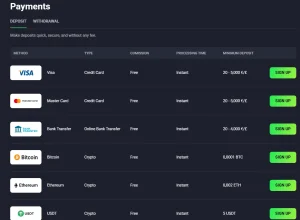
LuckyWave’s published cashier information is assessed separately in the payment-method guide. Seeing a payment method on a casino site should not be treated as evidence that the site follows every UKGC payment condition. Regulatory compliance is established through licensing and applicable rules, not through visual similarity to a licensed operator’s cashier.
Operator identity is a separate trust signal
LuckyWave’s published material associates the brand with AMO GLOBAL S.R.L. in Costa Rica. A named operator is more informative than an anonymous website because it gives players a specific entity to compare across terms, payment descriptors and support correspondence. It is not, however, a substitute for a UKGC licence entry.
A practical trust check therefore uses an evidence hierarchy. First, verify the regulator register for regulatory claims. Second, check the operator name and contractual terms. Third, compare operational facts such as cashier rules, withdrawal limits, verification requirements and support channels. Treating those layers separately reduces the risk of turning one positive or negative signal into a verdict about everything else.
Published responsible-gambling resources
LuckyWave publishes links to external responsible-gambling support resources including Gamblers Anonymous, GamCare and Gambling Therapy. That is a useful operational fact because it shows that support information is present in the brand’s own responsible-gambling material.
It should not be confused with proof of UKGC participation, GAMSTOP coverage or any other scheme that depends on licensing status. A site can link to a charity or support organisation without being regulated by the same authority as a locally licensed casino. players who need self-exclusion or treatment support should use the service that is appropriate to their location and circumstances rather than assuming that every operator participates in the same network.
What customer reviews can add – and what they cannot
Trustpilot provides a current view of customer sentiment, but it is not a licensing source and individual reviews do not establish contested facts on their own. On 26 September 2026, the LuckyWave Trustpilot profile showed 788 reviews and a strongly polarised distribution: 38% five-star and 44% one-star. Trustpilot also reported that the company replied to 98% of negative reviews, typically within two weeks.
Those numbers are best read as a signal to investigate recurring service themes, not as proof that a specific complaint is true or false. Review platforms contain self-selected experiences, can change quickly and do not verify every underlying transaction. For a withdrawal or account dispute, keep your own timestamps, transaction references and support messages. Use reviews to see what other users say, but use contractual terms and primary records to establish what happened in your own case.
Tax on ordinary gambling winnings in the UK
For ordinary customers, UK gambling winnings are generally tax-free. GOV.UK explains that customers do not pay gambling duty on stakes or winnings, while gambling duties are imposed on operators. HMRC’s current Business Income Manual also lists gambling winnings from wagers and bets among receipts not taxed under the miscellaneous-income provisions.
This statement is about ordinary gambling winnings, not every possible business or professional arrangement involving gambling-related activity. It is included because tax questions often appear in UK casino research, but it should not be mixed with the licence question. A tax-free win does not imply that the operator is UKGC licensed, and the operator’s licence status does not change the basic tax treatment of an ordinary customer’s wager winnings.
How to assess LuckyWave without collapsing everything into one score
- Start with the register. For a UKGC claim, use the Gambling Commission register rather than review-site badges or unsourced licence statements.
- Keep geography precise. Great Britain and Northern Ireland do not use an identical remote-gambling framework.
- Check the operator name. Compare AMO GLOBAL S.R.L. across terms, cashier records and support correspondence where relevant.
- Read the payment rules before depositing. Minimums, withdrawal rules and funding ownership can affect the practical experience even when the licence question is already clear.
- Understand verification before cashing out. LuckyWave’s published terms allow identity, residence, source-of-funds and payment-system evidence to be requested; see the account setup guide before creating an account.
- Use UKGC rules only as labelled benchmarks. A 10x wagering cap, slot stake cap or credit-card ban is useful context for comparing markets, but it is not evidence that LuckyWave is supervised under those rules.
- Treat reviews as attributed sentiment. A review pattern can tell you where users report friction, but it cannot replace your own records or regulator evidence.
Questions that require separate evidence
The regulatory evidence does not state that LuckyWave is “safe” as an absolute conclusion. Safety in online gambling is not a single observable fact: it can refer to regulatory supervision, payment security, identity controls, game fairness, account handling or a player’s own gambling behaviour. The verifiable points are the specific regulatory and product facts stated here.
A blanket conclusion that LuckyWave is fully legal or illegal throughout the United Kingdom would go beyond the verified evidence. The primary verified point is that no UKGC licence was verified for the brand in the public register and that businesses serving remote gambling to consumers in Great Britain require a Commission licence. Broader legal conclusions can depend on facts and jurisdictional questions beyond a simple brand search, so the page stays within the evidence actually checked.
Bottom line In the UK context
For the broader review context, return to the LuckyWave review. The central regulatory fact is straightforward: no UK Gambling Commission operating licence was verified for LuckyWave in the public register. For players in England, Scotland and Wales, that means you should not assume the protections and licence conditions that apply to UKGC-regulated remote casinos apply here. Northern Ireland should be considered separately rather than treated as identical to Great Britain.
That regulatory result should sit alongside, not replace, the rest of your due diligence. Check the withdrawal rules, understand account verification, read the current terms and keep records of deposits and support conversations. If your priority is a casino operating inside the Great Britain licensed framework, verify the operator and domain in the UKGC public register immediately before signing up.
References and date
The regulatory information is dated 26 September 2026 and cites the UK Gambling Commission public business register and current UKGC guidance on remote licensing, bonus wagering requirements, online-slot stake limits and credit-card gambling. Tax wording cites GOV.UK and HMRC material. Review statistics are attributed to Trustpilot and are not presented as findings of fact about individual disputes.